Silk thread jewellery making may look simple on the surface, but even the most creative beginners often stumble into common traps that can affect both the design and durability of their creations. Whether you’re crafting bangles for fun, building a side hustle, or exploring jewellery making as a full-time business, identifying these early mistakes can save you time, money, and frustration.
Let’s unpack the five most frequent errors hobbyists make and explore practical ways to avoid them—especially if you’re just starting your silk thread jewellery journey.
What happens if you don’t prepare your base properly before wrapping silk thread?
One of the biggest mistakes beginners make is skipping the prep work. If the base—whether it’s a plastic bangle, pendant, or ring—is dusty or uneven, the silk thread won’t adhere smoothly. You may notice bumps, fraying edges, or loose threads over time. Using adhesive directly on unclean bases also weakens the hold.
To avoid this, always clean the surface with a dry cloth and lightly sand any sharp edges before applying glue. A clean, slightly rough surface ensures better grip for your thread and extends the life of the piece. Some crafters even use nail buffers or fine emery paper to prepare PVC or plastic bases. If you’re using metal bases, make sure to degrease them with a bit of alcohol for better adhesion.
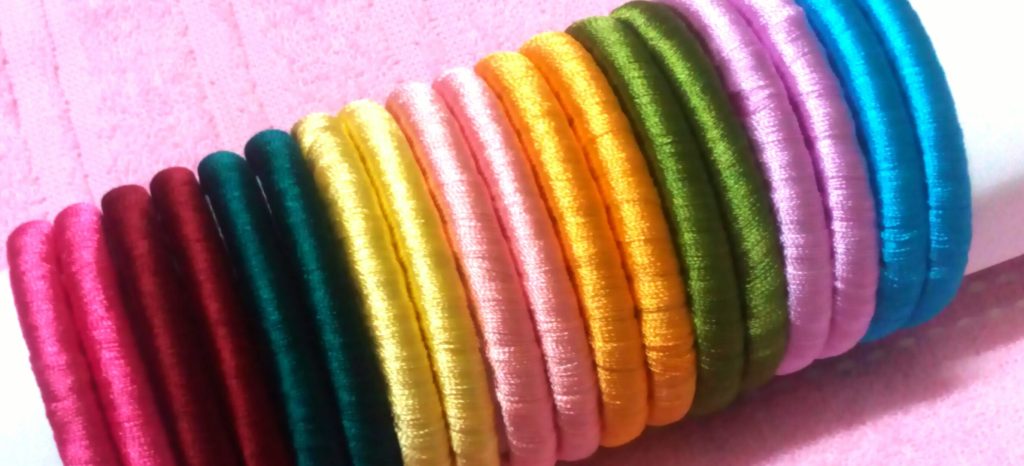
Skipping this step leads to frustration later on—especially if you’re packaging for sale and find threads detaching during shipping.
Why does silk thread unravel even after using glue?
Many beginners assume that applying more glue equals better bonding. In reality, overusing glue can make the thread brittle, cause it to discolor, or even peel off entirely. The thread needs tension, not just adhesive.
Apply a thin, even layer of high-quality fabric glue in small sections. Don’t try to coat the entire bangle at once. Wrap in small increments, maintaining consistent pressure, and smooth the thread with your fingers as you go. For curved areas like pendant bases, use tweezers to ensure thread alignment. Overlap each round slightly, and always press down gently with a clean cloth to avoid fingerprints or clumps.
Let each piece dry completely—ideally overnight—before wearing or selling. Curing time makes a major difference in long-term durability.
What kind of thread quality should beginners avoid—and why?
Not all silk threads are created equal. Many low-cost threads marketed as “silk” are actually rayon or polyester blends. While they may appear glossy, they often tangle, snap under tension, or fade after minimal use.
Look for threads labeled as art silk or embroidery silk from reliable brands such as Anchor, Ganga, or Poonam. These brands offer consistent color shades, thread strength, and minimum fray. Thread thickness also matters—a medium-thick thread offers better coverage and tension balance, especially for new hands.
If you plan to photograph or list your products online, cheap thread shows poorly under lighting. Product quality becomes evident in close-ups, and thread sheen can make or break your listings.
How can using the wrong tools damage your jewellery?
Skipping essential tools like foam boards, thread holders, or precision scissors leads to uneven wrapping, fraying ends, or visible glue stains. Regular household scissors often result in fuzzy edges or thread wastage, which affects the overall finish.
Beginner kits should include sharp embroidery scissors (with narrow blades), a glue applicator with a fine nozzle, a foam base or thermocol board for pinning, and measuring tape for symmetrical design work. If you’re working with silk thread chains or Jhumka cones, a nose plier is essential for holding, twisting, and adding metal parts like eye pins and bead caps.
Also, consider using a color palette or pin board to organize embellishments by shade. This prevents last-minute mismatches and lets you plan color gradients or complementary pairs ahead of time—especially important for bangle sets or bridal orders.
Why is rushing the finishing process a big mistake?
The final step—sealing your jewellery and adding embellishments—is where many beginners lose patience. They may skip bead caps, add too much glue, or press components before the base has dried completely. This results in crooked attachments, discolored metal parts, or even breakage during wear.
This step is also where your brand identity starts to form. Using messy embellishments or unbalanced arrangements can ruin an otherwise beautiful wrap. To avoid this, use a needle or pin to apply glue precisely to small spaces. Choose embellishments like stone chains, kundan motifs, or rhinestones based on size and symmetry—not just visual appeal.
Let your work sit for a full 24 hours in a dust-free box if possible. Rushing to pack or ship pieces too soon is one of the fastest ways to lose customer trust.
How do these mistakes affect small home businesses or Instagram sellers?
Inconsistent quality, poor finishing, and thread unraveling are common reasons why customers hesitate to reorder handmade jewellery online. Unlike factory-made pieces, handmade items must compete on uniqueness and reliability. Even if your designs are creative, sloppy execution leads to negative reviews.
If you’re targeting wedding markets or corporate gifting, poor base prep or thread quality can cost you bulk orders. Several sellers have lost return clients due to discolored thread, embellishments falling off in courier, or allergic reactions from exposed glue.
Consistency is your secret weapon. Building a strong home business requires setting internal quality control, even if you’re working alone.
Mastering silk thread jewellery is about consistency, not perfection
Silk thread jewellery is a beautiful, mindful craft that rewards patience and practice. Whether you’re designing for yourself, selling at flea markets, or launching an Instagram brand, small improvements in technique go a long way.
By steering clear of these five beginner pitfalls, you’ll not only make more polished pieces but also build the confidence to experiment with your own creative ideas. Over time, you’ll start developing a signature style—and that’s what makes your jewellery truly handmade.