Celebrate Navratri 2025 Day 2 with Goddess Brahmacharini by preparing Moong Dal Sundal. Discover recipe, health benefits, and cultural traditions.
Why is prasad an integral part of Navratri Day 2 worship to Goddess Brahmacharini?
Navratri is not just about fasting — it is about balance, discipline, and devotion. On the second day of Navratri 2025, falling on September 23 (Tuesday), devotees worship Goddess Brahmacharini, who symbolizes penance, perseverance, and the pursuit of wisdom. She is depicted holding a rosary in one hand and a kamandal in the other, embodying the quiet strength of tapasya.
Prasad prepared for this day reflects the simplicity and purity associated with the goddess. Foods that are sattvic, light, and nourishing are preferred, since they represent both restraint and energy. Across different regions, offerings vary, but South India has a strong tradition of preparing Sundal — a simple legume-based dish that is both spiritually symbolic and nutritionally sound.
Why is Moong Dal Sundal considered an ideal prasad for Navratri fasting?
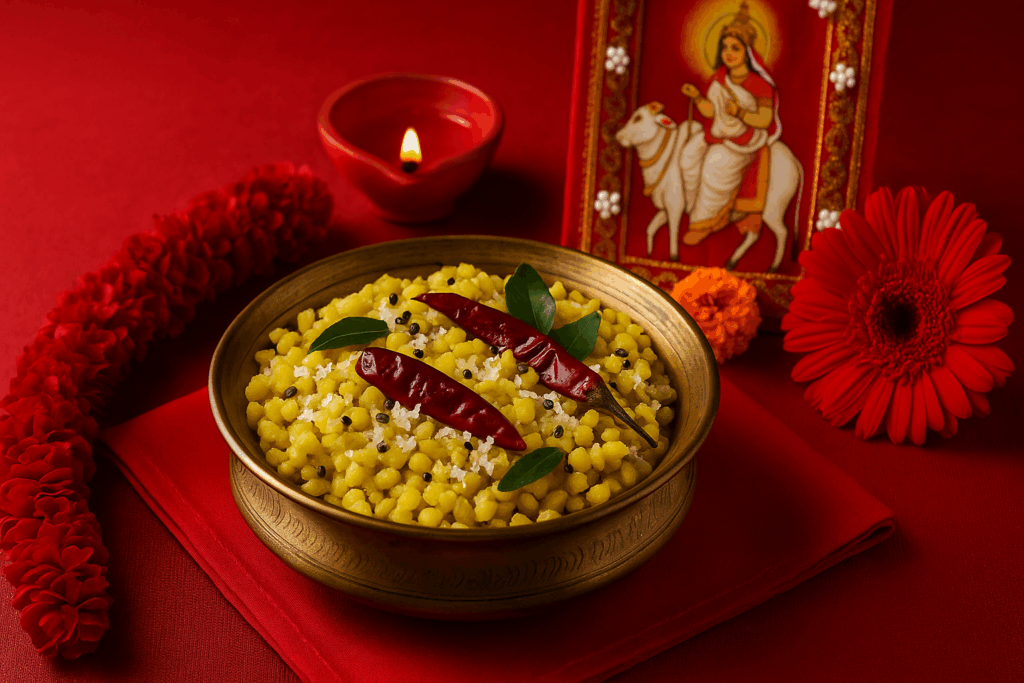
Moong Dal Sundal is a dish made with boiled whole green gram, lightly tempered with coconut, curry leaves, and mustard seeds. Its simplicity makes it fitting for Goddess Brahmacharini, whose tapasya was marked by purity and endurance.
For devotees, Sundal is more than just food — it is a reminder that even in austerity, nourishment is necessary for strength. The use of moong dal, considered one of the easiest lentils to digest, ensures that the body receives protein and energy without heaviness, supporting long hours of prayer and fasting. Coconut and curry leaves add freshness and healing qualities, making Sundal a sattvic superfood.
How does the colour red and Sundal preparation connect with Navratri Day 2 rituals?
The colour red dominates Navratri Day 2, signifying power, energy, and devotion. While the dish itself is naturally golden-green, devotees often enhance the altar with red flowers, cloth, and decor, and sometimes even garnish Sundal with dried red chilies for symbolic connection. Offering Sundal in red bowls or alongside red fruits like pomegranate reinforces the theme of the day.
The combination of red symbolism with a wholesome dish reflects how Navratri rituals blend colour, devotion, and food into a complete spiritual practice.
Step-by-step recipe for Moong Dal Sundal as Navratri Day 2 prasad
Ingredients
- 1 cup green gram (whole moong dal)
- 1 tablespoon freshly grated coconut
- 1 teaspoon ghee or cold-pressed oil
- 1 teaspoon mustard seeds
- 1–2 dried red chilies (optional, for symbolic garnish)
- 6–8 curry leaves
- A pinch of asafoetida (hing)
- Rock salt (sendha namak) to taste
Preparation method
- Wash and soak moong dal for 2–3 hours.
- Boil until tender yet firm — avoid making it mushy.
- Heat ghee or oil in a pan, add mustard seeds, curry leaves, dried chili, and hing.
- Add the cooked dal, sprinkle rock salt, and toss gently.
- Finish with a generous garnish of fresh coconut.
- This dish is first offered to the goddess before being shared as prasad among devotees.
What are the calorie count and health benefits of Moong Dal Sundal?
A small bowl of Moong Dal Sundal (around 100 g) contains 120–140 calories, making it light yet filling. Here is a breakdown of its health benefits:
- Protein powerhouse: Moong dal provides 7–8 g protein per serving, supporting muscle repair and satiety during fasting.
- Fiber-rich: High in dietary fiber, it promotes digestion and keeps hunger controlled.
- Low glycemic index: Helps regulate blood sugar levels, suitable for those fasting with dietary restrictions.
- Healthy fats: Coconut and ghee add essential fats that improve nutrient absorption.
- Micronutrient boost: Moong dal is rich in iron, magnesium, and potassium, supporting overall stamina during Navratri.
For devotees observing strict fasts, Sundal provides sustained energy without heaviness — a balance that mirrors Brahmacharini’s message of strength through simplicity.
How do cultural traditions strengthen Sundal’s significance in Navratri celebrations?
In Tamil Nadu, Andhra Pradesh, and Karnataka, Sundal is a mandatory part of the Navratri Kolu (doll festival). Each evening, households prepare a different variety of Sundal — using chickpeas, black gram, or green gram — and distribute it to visiting devotees. This act of sharing prasad is seen as a way of spreading the goddess’s blessings.
By offering Sundal on Day 2, families align themselves with centuries of tradition that celebrates food as a carrier of devotion. The dish becomes more than nutrition; it turns into a cultural expression of harmony, hospitality, and gratitude.
Final takeaways on why Moong Dal Sundal is the right Navratri 2025 Day 2 prasad
Navratri Day 2 is not just about worshipping Goddess Brahmacharini — it is about adopting her qualities of perseverance and discipline in daily life. Moong Dal Sundal mirrors these values through its purity, lightness, and nutritional strength. With red decor, red attire, and Sundal as prasad, devotees create a complete devotional environment that unites colour symbolism, cultural tradition, and health-conscious food.
This balance of austerity and nourishment ensures that Navratri remains a festival where body, mind, and spirit are equally honoured.