Navaratri is more than a festival of devotion, fasting, and rituals—it is also a celebration of colour, symbolism, and spiritual alignment. Across India, devotees observe each of the nine days with a specific colour, rooted in the energy of the goddess being worshipped. These colours are not chosen arbitrarily; they reflect the inner essence and cosmic vibration associated with each form of Goddess Durga. Whether expressed through clothing, floral offerings, rangoli art, or altar draping, the colour of the day sets the sacred tone for worship and mindfulness.
In 2025, Shardiya Navaratri begins on September 22 and culminates on September 30 with Vijayadashami. Each day honours a different manifestation of Durga, known collectively as the Navadurga, and each one radiates a colour associated with her divine traits. Participating in this colour tradition is more than an aesthetic ritual—it is a way for devotees to consciously align themselves with the qualities of the goddess, such as strength, wisdom, purity, and compassion.
Why do colours matter in Navaratri celebrations and what do they represent spiritually?
In Hinduism, colours are deeply symbolic. They serve as mediums of expression, healing, and transformation. During Navaratri, each colour is linked with the spiritual qualities of the day’s goddess. By adorning the self, home, or altar in the colour of the day, devotees channel the corresponding shakti or divine energy. It’s a practice that encourages inner focus, discipline, and harmony within communities. From emotional balance to invoking specific intentions—such as courage, peace, or devotion—colours become an integral tool of spiritual navigation during this sacred nine-night journey.
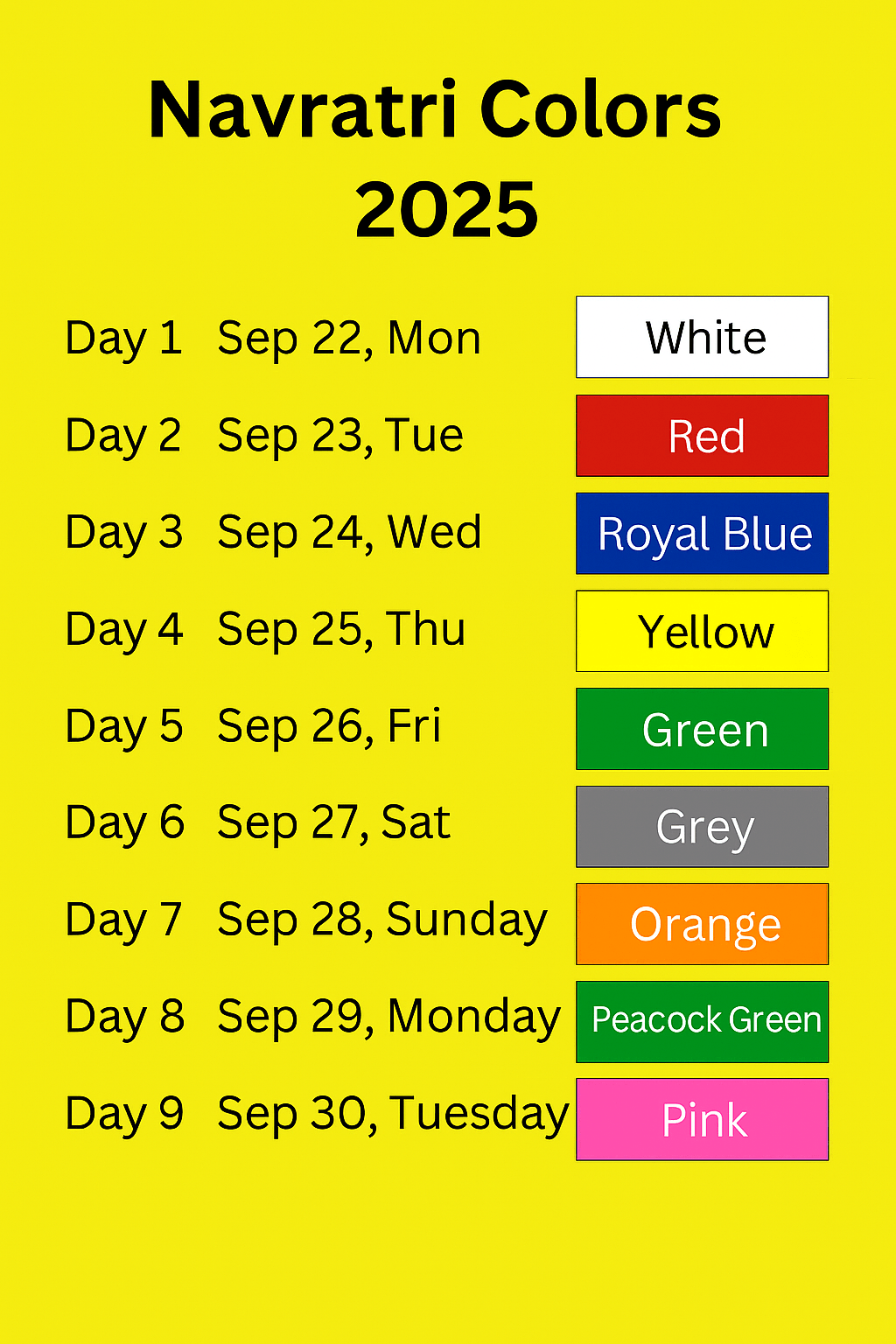
What is the list of 9 Navaratri 2025 colours and their day-wise significance?
For Navaratri 2025, the colours follow the official Panchang-based tradition observed widely across India. Here’s the corrected, day-wise breakdown of goddess forms and the significance behind each colour.
Day 1 (September 22, Sunday) — White
Day one honours Goddess Shailaputri, symbolizing purity and grounding. White reflects peace, spiritual clarity, and new beginnings. Wearing white initiates the journey with a calm and sacred mindset, preparing devotees for the deeper transformations to come.
Day 2 (September 23, Monday) — Red
Day two is dedicated to Goddess Brahmacharini, the embodiment of self-discipline and austerity. Red signifies strength, passion, and determination. It represents her intense tapasya (penance) and the fiery focus needed for inner transformation.
Day 3 (September 24, Tuesday) — Royal Blue
The third day celebrates Goddess Chandraghanta, known for her valor and divine grace. Royal blue conveys elegance, inner power, and emotional depth. The colour invites protection and courage while balancing aggression with serenity.
Day 4 (September 25, Wednesday) — Yellow
This day is devoted to Goddess Kushmanda, the cosmic creator whose radiant smile gave rise to the universe. Yellow embodies brilliance, vitality, and warmth. It attracts positive energy, motivation, and a sense of divine optimism.
Day 5 (September 26, Thursday) — Green
The fifth day honours Goddess Skandamata, a nurturing form who carries her child, Lord Kartikeya. Green represents fertility, life, and harmony. It channels healing energy, encourages growth, and strengthens family bonds and compassion.
Day 6 (September 27, Friday) — Grey
On this day, devotees worship Goddess Katyayani, a fierce and warrior-like form who destroys evil. Grey might seem understated, but it signifies the balance between action and reflection. It represents the subtle strength to confront one’s fears and karmic battles.
Day 7 (September 28, Saturday) — Orange
Day seven is for Goddess Kalaratri, the most intense and transformative aspect of Durga. Orange symbolizes spiritual fire, divine energy, and boldness. It reflects the sacred aggression required to dispel darkness and ignorance.
Day 8 (September 29, Sunday) — Peacock Green
This day celebrates Goddess Mahagauri, known for her radiance, patience, and grace. Peacock green blends aesthetic beauty with spiritual depth. The colour is associated with rejuvenation, refinement, and goddess-like elegance.
Day 9 (September 30, Monday) — Pink
The final day is dedicated to Goddess Siddhidatri, the giver of siddhis (supernatural powers) and spiritual fulfilment. Pink represents love, kindness, and transcendental joy. It concludes the festival with gratitude, divine blessings, and a return to inner peace.
How can devotees incorporate Navaratri 2025 colours into their everyday celebration at home?
Wearing the colour of the day remains the most beloved way to honour Navaratri’s spiritual rhythm. Women typically adorn themselves in sarees, lehengas, kurtis, or dupattas matching the daily hue. Men often choose colour-coded kurtas, angavastrams, or tilaks. These daily expressions are not just fashion choices—they are tools for inner tuning and collective celebration.
Homes decorated for Navaratri—especially those with Golu or Durga altars—often reflect the day’s colour in backdrops, floral arrangements, lighting, or cloth drapes. Even rangolis and diya setups can be customised in the shade of the day. Jewellery artisans, textile designers, and home decorators use this occasion to showcase unique collections inspired by each colour. Eco-conscious devotees also craft handmade decorations or reuse fabrics to keep the festival vibrant yet sustainable.
Why have the 9 Navaratri colours become a cultural phenomenon among women and creators?
What was once a quiet spiritual practice has become a celebration of creativity and cultural expression—especially among women and artisans. Today, fashion boutiques, social media influencers, jewellery designers, and even school and office communities follow the “Navaratri colour calendar.” Daily outfit challenges flood Instagram, and YouTube creators release “9 looks for 9 days” styling guides.
For small businesses and handmade brands, this is a peak festive season. Women-led brands use the opportunity to launch colour-based collections—offering bangles, sarees, juttis, and more in sync with the daily themes. Home-based artisans producing colour-matched gifts, altar accessories, or festive decor find growing markets in offline melas and online platforms. Beyond commerce, it’s a time for community, creativity, and connection—all through the shared language of colour and devotion.
What is the significance of Navami and Vijayadashami after the 9-day Navaratri colours tradition ends?
While the nine-day colour schedule of Navaratri concludes with Day 9 (September 30, 2025)—dedicated to Goddess Siddhidatri and marked by the colour pink—the spiritual journey does not end there. The final act of the festival unfolds over the next two days with Navami and Vijayadashami (also called Dasara or Dussehra), each carrying deep cultural and devotional meaning.
Mahanavami, observed on September 30, often overlaps with the ninth day and is considered the most austere and spiritually potent of all. On this day, many devotees perform Kanya Puja, where nine young girls symbolising the Navadurga are worshipped and offered food, new clothes, and gifts. The ritual represents the divine feminine in its purest and most innocent form, reminding devotees of the importance of nurturing, protecting, and respecting girl children. Pink, the colour of compassion and softness, resonates beautifully with this spirit of feminine celebration.
Vijayadashami, celebrated on October 2, 2025, marks the triumph of good over evil. In South India, it signifies Goddess Durga’s victory over the demon Mahishasura. In North India, it is the day Lord Rama defeated Ravana. Across India, the day represents victory—whether of truth, light, virtue, or dharma. It is considered highly auspicious for new beginnings, be it starting a business, enrolling in school, or learning a new skill—especially music, dance, or martial arts.
There is no fixed colour prescribed for Vijayadashami, but many choose to wear gold, red, or royal hues to symbolise power, success, and divine blessings. Rituals on this day often include immersing Durga idols in water, symbolising her return to Mount Kailash, or burning effigies of Ravana, signifying the destruction of ego and negativity.
How do Navami and Vijayadashami complete the spiritual arc of Navaratri 2025?
Together, Navami and Dasara complete the transformative journey that began on Day 1 with purity (white) and ended on Day 9 with divine wisdom (pink). These final two days are about anchoring those divine qualities into everyday life—through gratitude, celebration, and new aspirations.
For artisans, performers, teachers, and business owners, Vijayadashami is a time to thank the goddess for her blessings and set intentions for the months ahead. It is also a day of renewal and readiness, reminding us that spiritual insight must eventually translate into worldly action.