Navaratri, often culminating in Dasara or Vijayadashami, is one of the most joyous and spiritually rich festivals in India, celebrated across states with varying customs but united by the core theme of triumph of good over evil. Over nine nights and ten days in the month of Ashwin (September–October), devotees worship Goddess Durga in her various forms, observe rituals, fast, decorate homes, perform dances and dramas, and finally celebrate Dasara with great enthusiasm. Understanding Navaratri and Dasara deeply—what they mean, how they are celebrated, and how one can observe them meaningfully—can help you connect more with this festival beyond just tradition.
What is Navaratri, and where does the tradition come from?
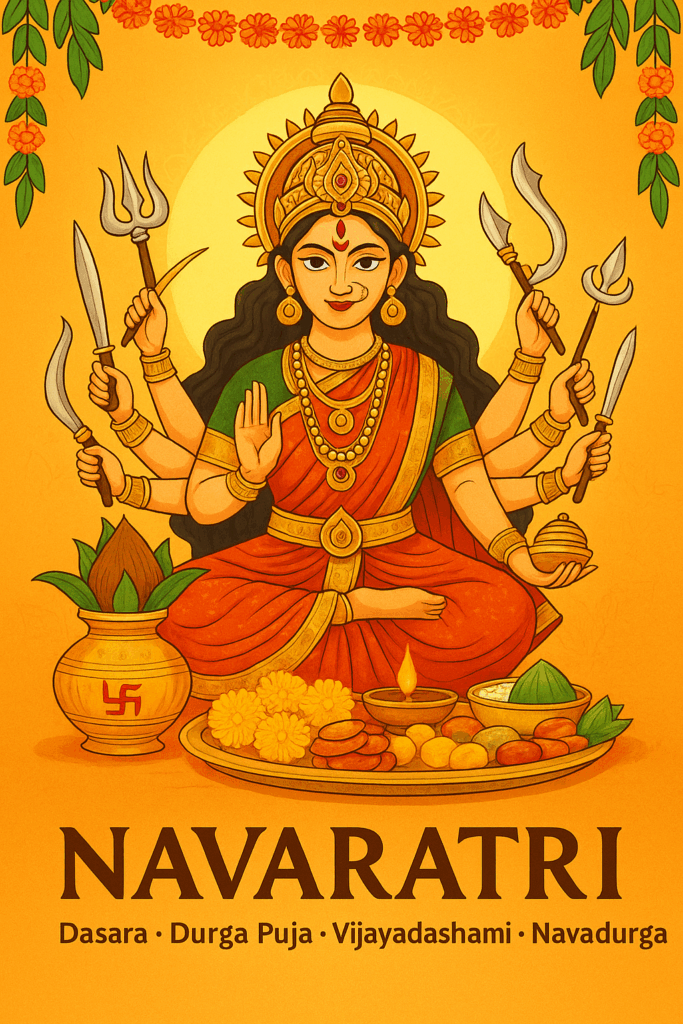
Navaratri literally means “nine nights,” and during these nights, nine forms of Goddess Durga (Navadurga) are worshipped. The festival is rooted in Hindu mythology, especially the story in which Durga defeats the demon Mahishasura after fierce battle. This narrative appears in texts like the Devi Mahatmya and Puranas. Over centuries, Navaratri has become as much a cultural festival as a religious one, bringing together community fairs, classical and folk dance, and literature, besides daily worship and puja.
How do people observe these nine days across India?
Across India, the way Navaratri is observed differs by region, language, and local customs. Many begin with setting up altars or pandals, placing idols of Durga decorated elaborately, followed by daily offerings of flowers, fruits, and naivedyam. Fasting is common in many households—some observe strict fasts, others partial fasts—often avoiding meat, alcohol, onions, or garlic. In western states like Gujarat, Garba and Dandiya dance nights become central; in southern regions, traditions such as Golu (in Tamil Nadu), Bommala Koluvu (Andhra/Telangana), and Gombe Habba (Karnataka) display dolls and figurines and invite neighbors to visit. On the ninth day, known in many places as Navami or Mahanavami, special pujas like Kumari Puja (worship of young girls as manifestations of the goddess) are held. Each day the goddess is worshipped in a different form, each form symbolizing different qualities like courage, prosperity, learning, and peace.
What is the significance of Vijayadashami (Dasara) day?
Vijayadashami or Dasara marks the tenth day, the end of Navaratri, and symbolizes the victory of good over evil. According to tradition, this is the day Durga triumphed over Mahishasura. In some regions, it is also the day when Lord Rama is believed to have returned to Ayodhya after defeating Ravana (as per the Ramayana). People mark this day with processions, immersion or disposal of idols in eco-friendly ways (where applicable), burning effigies of evil, reciting scriptures, exchanging greetings, and performing Ayudha Puja (worship of tools/weapons or implements of one’s trade) to honor the means of livelihood and creativity.
Why is Navaratri relevant in modern times beyond myth and ritual?
Beyond religious narrative, Navaratri has relevance today in how it unites families, encourages creative expression, and fosters cultural identity. For artisans, decorators, textile designers, jewellery makers, and performers, it is also a period of heightened demand and visibility. Homes get decorated, community spaces come alive, small businesses around festivals thrive. Many people use this time to reflect on personal growth, renew vows to inner virtues, and practice gratitude, self‑discipline, and generosity. The festival thus acts as both a spiritual pause and a community catalyst.
How can you celebrate Navaratri Dasara meaningfully at home?
Celebrating wisely means balancing tradition, devotion, and awareness. Start by selecting an idol or image of Durga made of eco‑friendly materials. Decorate the home with natural flowers, leaves (like mango leaves), rangoli, lights, and diyas. On each day of Navaratri, learn something about the form of the goddess being worshipped that day, perhaps through a story or meditation. If fasting, choose a style that your health allows; if not fasting, offering of simple food or fruits works. Invite friends or family for small cultural programs or bhajans. On Vijayadashami, observe Ayudha Puja for tools or items you use—clean them, worship them, and then symbolically use the day’s energy to begin something new—could be a project, a goal, or learning. Also, be conscious of the environment—avoid plastic decorations, avoid non‑biodegradable materials, and if idols must be immersed, choose proper immersion tanks or smaller home immersion in eco‑safe ways.
What lessons does Navaratri Dasara offer that go beyond the surface?
At its core, Navaratri Dasara teaches the power of resilience, the value of balance, and the inevitability of change. Worshipping Durga in her nine forms encourages embracing multiple dimensions of strength—courage, compassion, wisdom, patience. The ritual cycle of welcoming the goddess, worshiping her, and then letting that divine presence depart on Vijayadashami reminds us of impermanence and renewal. It also teaches humility, surrender of ego, and alignment with virtues rather than vanity. In the hustle of modern life, Navaratri can serve as a reminder to slow down, be intentional, and hold values of devotion, community, and self‑improvement.